The Meridian Breathwork & Acupressure Manual
Authorized by Master Lin Wuyuan (AUTH-CN-QG-2026-0412) • Daily Self-Care Reference
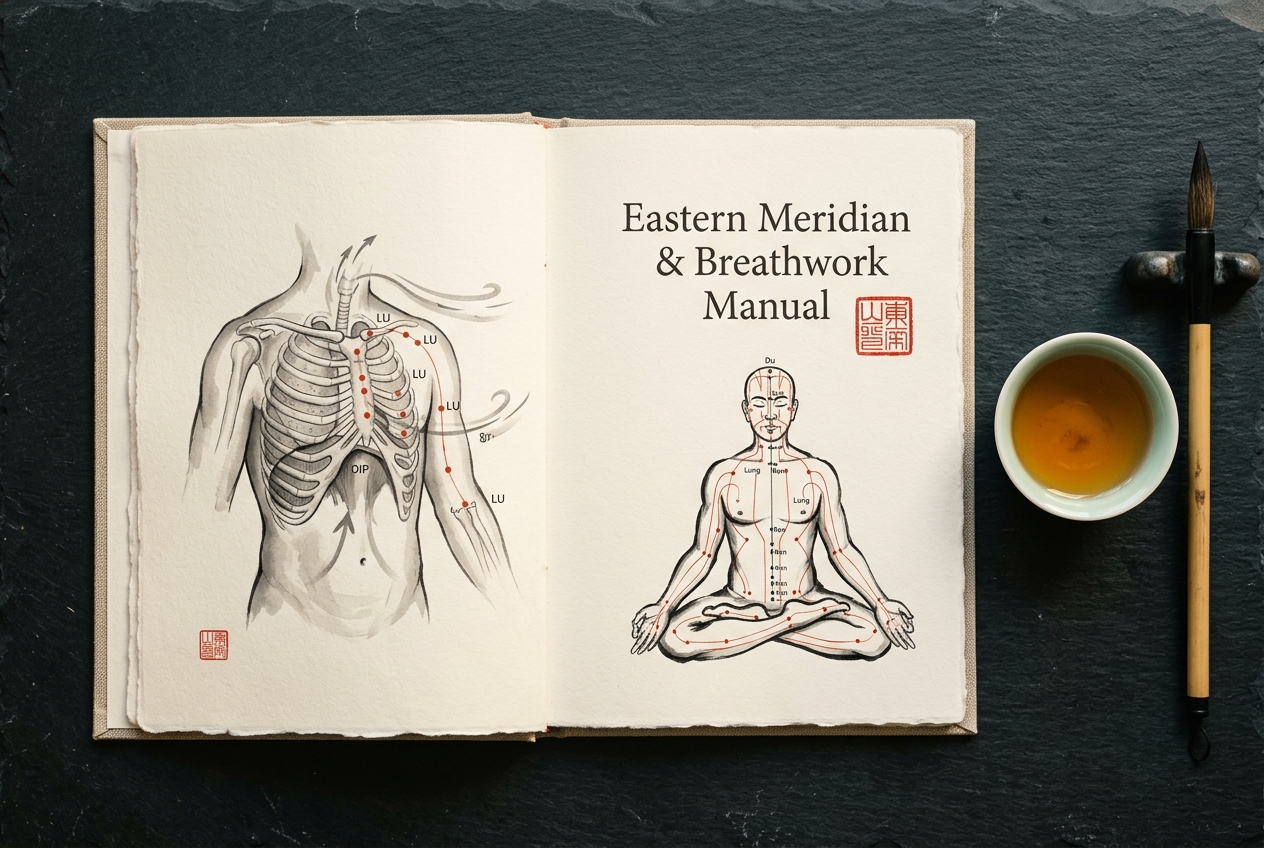
1. The 4-6 Dantian Vagal Breath Protocol (Morning & Evening)
In traditional Neigong, "Qi sinks to the Dantian" (three finger-widths below the navel). Chest breathing triggers sympathetic stress; lower-abdominal Dantian breathing activates the vagus nerve within 90 seconds:
- Inhale (4 Seconds through Nose): Rest tip of tongue gently against upper palate behind front teeth (connecting the Conception & Governing Vessels). Let lower belly expand 360 degrees.
- Soft Pause (1 Second): Keep shoulders dropped and jaw relaxed.
- Exhale (6 Seconds): Slowly release tension down through hips, knees, and soles (Yongquan KI-1 point) into the floor.
2. Four Essential Daily Acupressure Points
Location: Inner wrist crease, pinky side tendon hollow.
Benefit: Calms racing thoughts & insomnia. Press gently 60s per wrist before sleep.
Location: Sole of foot, center depression one-third down from toes.
Benefit: Grounds balance, relieves cold feet & head tension.
Location: Base of skull in the two hollows beside neck muscles.
Benefit: Releases computer neck stiffness & screen eye strain.
Location: Four finger-widths below kneecap, outside shinbone.
Benefit: Supports knee vitality, digestion, and leg endurance.